Safety Sailing Trip Offerings:
Newport to Newport
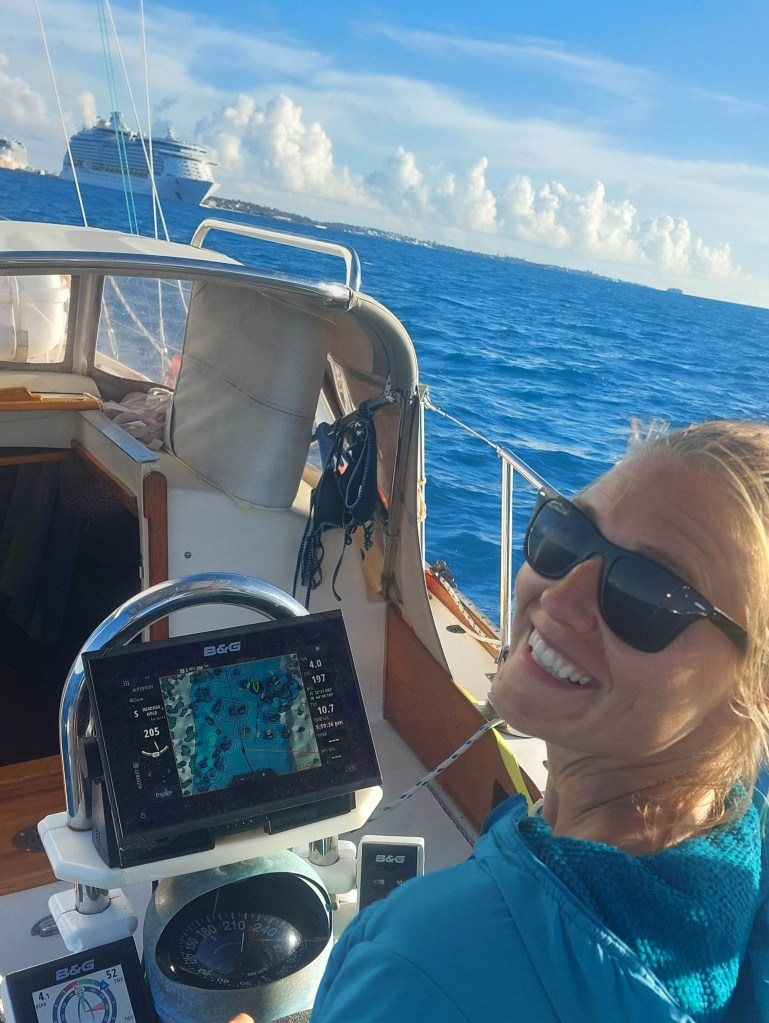
Our flagship services. The phrase Newport to Newport refers to a trip from Newport, Rhode Island to Newport News, Virginia. Of course these are not the actual starting and ending points for your vessel. We use this term referring to a 3-4 day near coastal trip along the east coast anywhere from Canada to the Bahamas. This trip typically provides a support crew member assisting a couple who own the vessel. Variations are possible. The owners, referred to as the partner crew experience new skills involving each being able to single handle the vessel. This enhanced safety skill is best when routinely practiced however it is not a recommendation to change the way you normally handle your boat. In an emergency situation it’s comforting knowing either of the partner crew are able to transport their vessel to a place of safe refuge without assistance. You are still the master of the vessel. We provide assistance in learning these new skills. We also assist in is choosing routing, picking a comfortable window for weather and sea state. Towards the end of the trip we prefer to see the partner crew owners taking turns single handling the vessel as a two person crew. The support crew person will participate in a rotating watch and helmsman schedule if requested by the master. The vessel is your own. We do not try to control scheduling or routing. Instead we assist in experiencing new skill and safely moving your vessel to its destination.
You are the master of the vessel, we assist as crew.
- You are the master of the vessel, we assist as crew.
- You determine the route, we assist if requested.
- You choose the weather and sea state to embark on the journey, we assist in determining suitability of the weather window for vessel and skill level of the crew.
- We will not participate in the journey if the master of the vessel choses a weather window we feel is unsafe.
- Assist in identifying other vessels by their navigational light configuration.
- Assist in recognizing the approach of sudden wind shifts, when possible, and adjusting to mitigate injury or damage.
- Provide an experience allowing you to increase your skills and become more comfortable with transporting your vessel on a near coastal route.
Fee Structure for Newport to Newport (Coastal Trips)
- $42.50 per hour while vessel is in transit
- $27.50 per hour while on vessel at anchor or in a slip.
- $27.50 per hour travel time from and to Stonington.
- Transportation cost of airfare, ferry, railroad or other transportation; direct cost, no overhead added.
- Lodging when not on vessel; direct cost, no overhead added.
- Food when not on vessel; $45.00 daily.
- Food while on vessel; provided by partner crew.
Day Trips
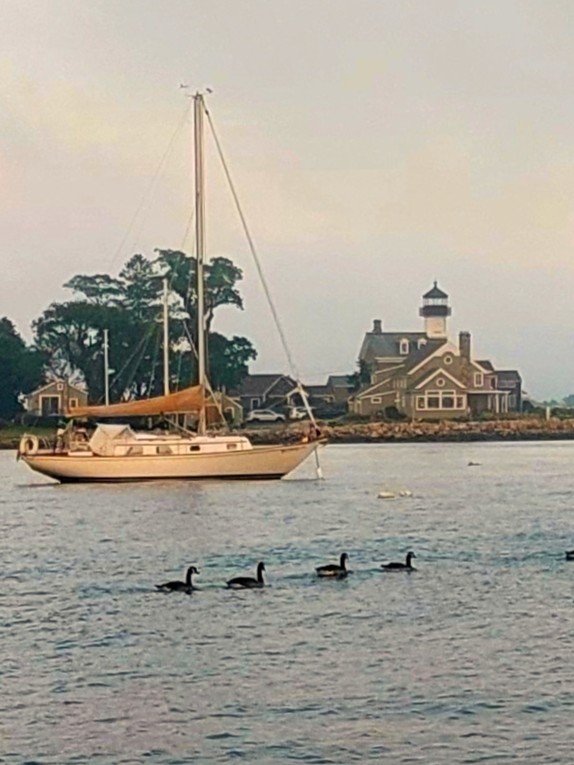
Located in Stonington, Connecticut we are able to provide day trips in LI Sound, Block Island, Narragansett Bay, and Buzzards Bay. Typical of our services we provide a crew member to support you as master of the vessel. Day trips are custom tailored to fit your needs. Typical skills in demand may include the following:
We find increasing navigational skills are in demand. Another skill to practice is anchoring, choosing an anchorage, setting the anchor, use of anchor alarms and later getting under way.
- Navigational Skills: Do I really understand my chart plotter and how it relates to what I see around me? Can I chart a course favorable for wind and tide? Can I get to Block Island and Back? Do I understand the symbols on a chart? Can I watch my surroundings to see if I’m drifting off course? Practicing navigation is always helpful.
- Anchoring: How to choose an anchorage. Will the anchorage be protected from swell. Does the bottom provide good holding. What scope should be used. Will I have enough swing room for change in wind or tide direction. Is the anchor set well. How well do anchor alarms work. Are there concerns for weighing the anchor and getting underway.
- Currents: Which direction will the current be flowing. When will the current change direction. How strong will the current be. Can I sail against the current? Is my engine strong enough to push me through the current? Will the current drag the vessel into danger.
- Sail Control: Which sail is deployed first. Is the same pattern of deployment used in coastal sailing as in ocean sailing. What is a good sail plan for going upwind vs downwind. How to avoid jibing. How to reef while underway. How to drop the mainsail while underway.
- Right of Way: Which vessel has right of way. What is different between sailing and motor sailing. What is the difference between restricted in maneuverability and not under command and how does it effect me?
- Night Sailing: Is it safe. How to identify if the light is a vessel, navigational aid or background clutter. Is the other boat approaching or going away. What do the light configurations on different vessels mean.
- This is also a good place to practice our flagship set of safety skills, how to single handle your vessel.
Fee Structure for Day Trips
- $37.50 per hour with a 4 hour minimum.
- $27.50 per hour travel time from and to Stonington.
- Transportation cost of ferry, railroad or other public transportation, no overhead added.
- No additional cost for food.
Heavy Weather Sailing
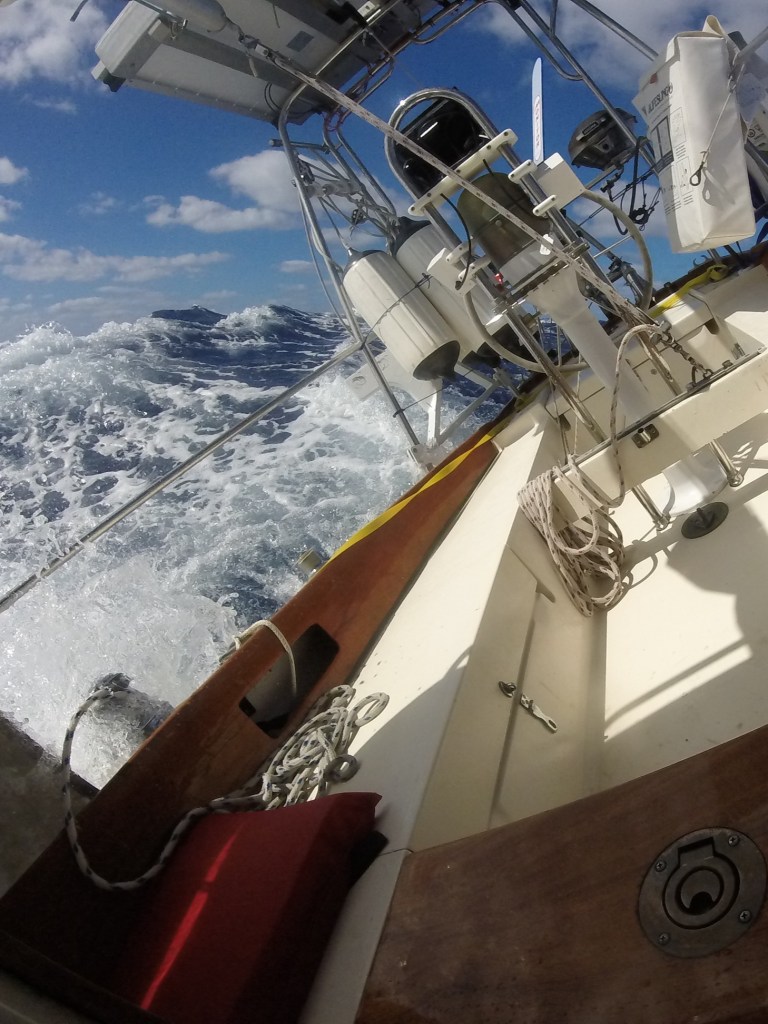
Experience at heavy weather sailing comes in two distinct varieties, “Near Coastal” and “Open Ocean”.
- Coastal heavy weather sailing experience is required before open ocean heavy weather sailing.
- Heavy weather typically starts around 40 kts, however for experiencing this type of sailing we will consider heavy weather sailing to be predicted in the low 30 kt range.
- Coastal and near coastal sailing in heavy weather may expect waves in the 10 to 15 ft range and slightly steeper than open ocean.
- Open ocean sailing in heavy weather may expect waves in excess of 15 ft and not as steep as coastal conditions.
- Coastal heavy weather sailing may be experienced during a day trip while open ocean sailing in heavy weather required sever days.
- Your boat must be suitable for heavy weather conditions especially if open ocean sailing is desired.
- A suitable blue water capable boat with recently installed standing and running rigging as well as good sail conditions are required.
- Coastal sailing in heavy weather does not require the same vessel requirements as open ocean sailing.
- Coastal sailing in heavy weather may be accomplished when standing and running rigging are near the end of life expectancy, however the owner shall take the burden of possible de-masting and be prepared to be towed in the event of equipment failure.
- All heavy weather sailing runs the risk of equipment failure, crew misunderstanding, unexpected severe conditions with the possibility of requiring rescue. These risks should be anticipated by the owner of the vessel and crew before committing to the experience.
- On the brighter side, this is also a time to experience heavy weather conditions in a coastal environment rather than experiencing these conditions in the open ocean where help if hours or days away.
- The following information being shared may be important to anyone considering heavy weather sailing. These points of view come from a cruiser and a racer. The cruiser said “don’t go out in these conditions, you may break something” while the racer said “this is the best time to go, if you break something you’re close to shore which is much better than breaking it several hundred miles offshore”. These are two different perspectives each with their own merit. Although heavy weather may be safer in the open ocean since there is nothing to be blown into when heaved-to, the first steps of practice may be best in a coastal environment.
Fee Structure for Heavy Weather Day Sailing
- $57.50 per hour with a 4 hour minimum.
- $27.50 per hour travel time from and to Stonington.
- Transportation cost of ferry, railroad or other public transportation, no overhead added.
- No additional cost for food.
Fee Structure for Heavy Weather Open Ocean Sailing
- Quotation upon request.
Island Hopping
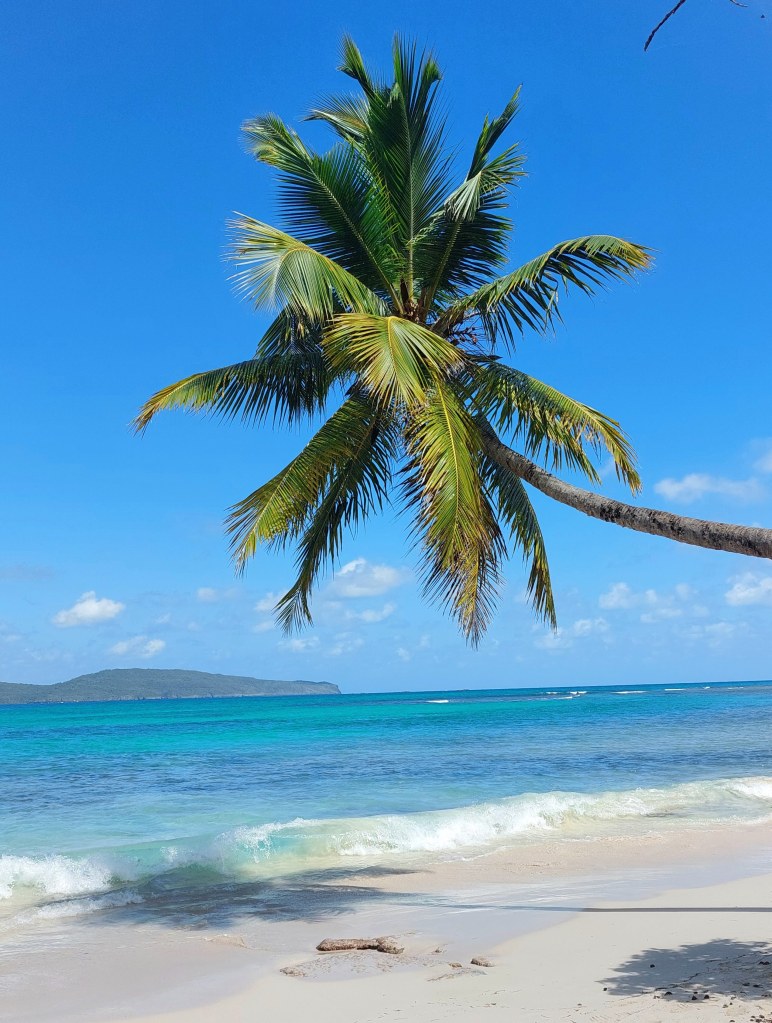
All cruisers look forward to island hopping in paradise. It’s difficult to image the crystal clear waters and white sand beaches until actually seeing them. This paradise always comes with a cost, maybe not a monetary cost, but some type of cost. There are no protected anchorages within 100 miles if the winds shift. Can I anchor in 40 ft of water while being 150 ft offshore? There’s no indication which way the current will flow through this cut at different tides. My engine stopped running, how do I get to a place where it can be repaired. The list of problems encountered by cruisers is endless. Soon we will include client oriented island hopping support. Whether it be a day journey, an overnight journey or several week journey, we will be able to assist the master of the vessel. We look forward to providing this service.
 Safety Sailing